Introduction of B.SC Medical Lab Science*
Why choose BSc Medical Lab Science in 2026?
The healthcare industry is evolving worldwide and diagnostic testing has become one of the most important pillars of modern medicine. Doctors always look for laboratory reports to diagnose disease, monitor treatments and detect health conditions at an early stage. With the increased demand for skilled Medical Laboratory Scientists across hospitals, pathology laboratories, diagnostic chains, research organisations and public healthcare institutions.
- It equips students with the theoretical knowledge and laboratory skills to perform sophisticated diagnostic tests accurately.
- Analysing blood samples and detecting infectious diseases to operating automated laboratory equipment.
- Increasing burden of chronic disease, preventive healthcare awareness, molecular diagnostics and digital pathology.
Skills you will develop during the course
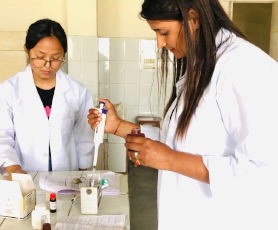
BSc. Medical Lab Science focuses heavily on practical learning. Throughout the program, students gain hands on experience in hospital laboratories and learn to use modern diagnostic equipment under expert supervision. Students develop professional skills, including:
|
Blood sample collection |
Clinical Biochemistry |
Clinical Microbiology |
Heamtology |
|
Histapathology |
Immunology & Serology |
Blood Banking |
Molecular Diagnostics |
|
Laboratory Automation |
Quality Control Procedures |
Infection Prevention |
Laboratory Information Systems |
|
Report Interpretation |
Medical Ethics |
Laboratory Safety |
|
Modern Laboratory Technologies you will learn
In today's modern world, medical laboratories are becoming highly automated and students must understand the latest diagnostic technologies used worldwide during the BSc Medical Lab Science program. Some of the important technologies include:
- Polymerase Chain Reaction
- RT-PCR testing
- ELISA Testing
- Flow Cytometry
- Automated Hematology Analyzers
- Clinical Chemistry Analysers
- Digital Microscopy
- Molecular Diagnostic Techniques
- Immunoassay Systems
- Laboratory Automation Software
Semester Wise Course Curriculum
|
Semester |
Major Subjects |
|
Semester I |
Human Anatomy, Human Physiology, Biochemistry, Communication Skills. |
|
Semester II |
Clinical Pathology, Haematology, Microbiology, Practical Laboratory Training |
|
Semester III |
Histopathology, Clinical Biochemistry, Immunology, Blood Banking |
|
Semester IV |
Molecular Biology, Diagnostic Techniques, Medical Ethics, Research Methodology |
|
Semester V |
Clinical Research, Laboratory Automation, Cytology, |
|
Semester VI |
Internship, Project work, Hospital Posting, Case studies |
Eligibility for B.Sc Medical Lab Science
A person who has secured at least 50% marks ( 45% in case of a candidate belonging to the Scheduled cast/tribes) of the aggregate marks in four compulsory subjects i.e. Chemistry, Physics, Biology/Math and English taken together of 10+2 pattern or equivalent examination from recognized Board/University shall be eligible to join the first semester of the course OR Intermediate/10+2 with agriculture subjects.
Career Opportunities After B.Sc Medical Lab Science
The demand for laboratory technicians is very high in the medical industry. These are the jobs available for B.Sc MLS graduates: Medical labs are where MLS professionals can be seen in action. Government hospitals, private hospitals, clinics and nursing homes with medical labs are known to recruit medical technicians.
- Laboratory Technician
- Technology Manager
- Laboratory Manager
- Laboratory Assistant
- Medical Officer
- Research Associate – Biotechnology Research Laboratory (Tissue Culture)
- Medical Record Technician
- Resident Medical Officer
- Laboratory Testing Manager
- Associate Professor – Biotechnology/Bio-Medical
- Phlebotomist
- Blood Bank Technician
- Medical Coder
- Biochemist Technician
- Laboratory Supervisor
- Clinical Pathology Technician
Top Recruiters
Students graduating from BSc Medical Lab Science can find employment opportunities in leading healthcare organisations such as:
- Government Hospitals
- Private Multi Speciality Hospitals
- NABL accredited diagnostic laboratories
- Blood banks
- Medical research institutes
- Biotechnology companies
- Public health laboratories
- Pharmaceutical companies
- Healthcare startups
Why to choose B.Sc Medical Lab Science
Medical Technologists play an important role in the medical job. The job opportunities in this field depend on the basis of the technical and practical knowledge a person has been exposed to. The experts get engaged in detecting various illnesses and making a report so that doctors can prescribe treatment for a particular illness. With the development of the private sector, there has been an increase in the demand for lab technician professionals in hospitals, labs, blood banks, nursing homes, pathology laboratories, etc. With profound knowledge, professionals can also get a manager level job in hospitals and pathology labs. At the start of a career, candidates can get an initial salary of INR 2 lakh to 5 lakh. The salary increases with the increase in experience and goes till 10 lakh P/A. The salary in a private hospital is generally higher than that of a government hospital
Study Programme
General Microbiology, Bacteriology, Virology, Microbial physiology and biochemstry immunology, Medical Microbiology, Mycology and plant pathology, Molecular Biology and genetic Engineering, Diagnostic Microbiology, Environmental Biotechnology, Advances in industrial Microbiology, Bio-Information and statistics, Project work.
Internship and Practical Training
Clinical training at hospital labs is another powerful component of the B. Sc. Medical Lab Science program. At these facilities, you’ll process actual patient samples and gain hands-on experience operating modern diagnostic machinery, implementing rigorous quality controls and preparing lab reports with assistance from experienced professionals.
Future Scope of Medical Lab Science
The medical lab science field is anticipated to be among the fast growing allied healthcare professions as technology continues to advance and more health care services are being required to service our increasing healthcare needs. More health care professionals are being hired into specialities like molecular testing, gene testing, and even personalised medicine, AI in pathology, and clinical research jobs.
Graduates can also pursue higher education, including:
- MSc Medical Lab Science
- MSc Microbiology
- MSc Clinical Research
- Master of Public Health
- MBA in Hospital Administration
- PhD in medical laboratory sciences
FAQs
What is B.Sc. Medical Lab Science?
It is a three-year Bachelor’s course program designed to train the candidates in medical diagnosis, laboratory testing and diseases detection.
Who is eligible for B.Sc. Medical Lab Science?
Candidates who passed 10+2 with PCB subjects are usually eligible.
What is the course duration of B.Sc. Medical Lab Science?
Course duration is 3 years including 6 semesters and practical laboratory training.
Is B.Sc. Medical Lab Science good for my career?
Yes, it is. There are numerous career options in this field.
Which careers could I choose after the B.Sc. Medical Lab Science course?
One can be a Medical Laboratory Technologist, Lab Scientist, Blood Bank Technologist, Research Assistant and Quality Control Officer.
Does the course have any practical aspect?
Yes, there is practical lab training.