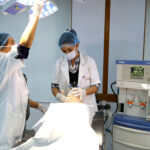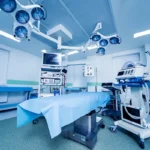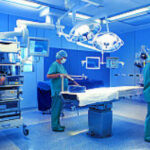
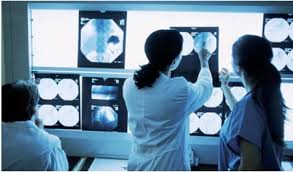
B.SC Radio Medical Imaging Technology Colleges in India – Radiography uses technically sophisticated equipment that produces x-radiation used to create images of the human body. This program will prepare you for a career as a radiographer if you have a strong background in math and science. And if you are searching for the best colleges to pursue your career in the same field then here we have brought B.SC Radio Medical Imaging Technology Colleges in India.
In this course, you will receive unparalleled training on state-of-the-art equipment. Your training will include general x-ray, orthopedics, pediatrics, emergency room, trauma, mobile studies, and the surgical suite. You will obtain first-hand, clinical experience in radiologic procedures at several of our affiliate hospital facilities, as well as other clinical facilities.
What Is B. Sc Radio Medical Imaging Technology?
You will have a degree in allied health at undergrad level which equips you to create diagnostic images of the human body through the use of X-ray, fluoroscopy, mammography, computed tomography (CT), magnetic resonance imaging (MRI) and ultrasound. Those who pass through this program become imaging technologists or radiographers. They are not radiologists, who take the images: radiologists are doctors who have completed their MBBS and an MD in Radiology.
It is now a statutory profession The Indian Medical Radiology and Imaging Technology (IMRIT) Society welcomed the NCAHP Act, 2021 that recognises Medical Radiology, Imaging and Therapeutic Technology as one of ten categories. Its schedule mentions the radiology and imaging technologist- diagnostic radiographers and technicians, MRI and CT, mammographers and sonographers- who are led by a radiologist or other medical specialist.
Current B. Sc Radio Medical Imaging Technology Jobs in India
India needs more trained operators of diagnostic imaging machines As diagnosis increasingly relies on imaging, the demand for specialists among hospitals, diagnostic chains and nursing homes for CT and MRI operators is growing. Better trained specialists can also benefit from a more formal recognition by the NCAHP Act 2021.
Key hiring areas:
- Some of the corporate hospitals like Apollo, Fortis, Max, and Narayana health etc. also hire imaging technologists.
- X-ray, CT, MRI and ultrasound are the job titles used by diagnostic chains and independent imaging facilities.
- Government and military hospitals provide a more steady position with a long term job security.
- Equipment manufacturers need application specialists.
- Overseas roles exist but require separate licensing.
Students with practical CT and MRI experience are employed most quickly so look for a college that provides extensive hospital training. Courses like M. Sc can take you into research, teaching and advanced imaging.
Course Duration and Structure
The time frame also varies by university. Many colleges are offering 4 years: 3 years of academic and clinical study followed by 1 year of internship. AIIMS Delhi, MMU Mullana and many private universities all require four years.
Others still offer 3 years of study with 6 months of internship.
Since the trend is moving towards the NCAHP-standard 4-year programme, check this with the university before you pay a seat deposit.
Eligibility Criteria
- Qualification: Class 12 (10+2) board exam with Physics, Chemistry and Biology. There are some colleges/universities which also accept PCM or PCMB, but PCB is the best combination of subjects to be eligible.
- Marks: Generally 45% to 60% aggregate depending on university, category for most universities.
- Age: Prospects should ordinarily be no less than 17 a long time previous as of 31 Dec of the admission 12 months.
- Medical Fitness: As the course is based on hospital visits, many universities will need the medical fitness certificate before admitting the students.
- Admission: Government colleges, like AIIMS, take by entrance. Most private colleges take merit in Class 12, sometimes with a counselling round. There is no national NEET-only policy for this course.
What You Will Study?
The first year develops the medical basis for radiology. Common courses are: anatomy and physiology; biochemistry; basic pathology; microbiology; pharmacology; functional English; computer science and research methodology. Second year and onward, core imaging topics are:
- Radiation physics and radiation protection
- Radiographic techniques, patient positioning and equipment
- Radiobiology and radiological safety
- CT, MRI and ultrasound technology
- Contrast media, patient care and emergency handling
- Image quality control and PACS – digital image archiving system
The last stage is a hospital imaging internship that takes place under supervision. It is when the degree crosses over to become a job skill and is consequently the most important part of the course.
Mission of B.Sc Radiology and Imaging Technology course
The mission of the B.Sc Radiology and Imaging Technology course is a radiography program that will graduate competent entry-level radiographers for the healthcare community. The graduates will exemplify qualities of excellence in patient care, professionalism, safety, and ethical behavior thereby enhancing the healthcare experience of the patients they serve.
Radiography Program Goals and Student Learning Outcomes
Goal 1
Students will demonstrate critical thinking skills in the classroom and clinical setting. Student learning outcomes:
- Students will be able to formulate effective technical factors based on patient body habitus, trauma, pathology, and physical and equipment limitations.
- Students will critically evaluate completed radiographs.
Goal 2
Students will demonstrate skill in written and oral expression, Student learning outcomes:
- Students will demonstrate written communication skills
- Students will demonstrate oral communication skills
Goal 3
It will help the students to demonstrate professionalism, Student learning outcomes:
- In the clinical setting, aspirants will model professional behavior
- By working effectively on a team, students will demonstrate professional behavior in the classroom setting.
Goal 4
Students will demonstrate competency in entry-level radiography skills, Student learning outcomes:
- The student will produce radiographs of diagnostic quality
- The student will exhibit quality patient care
B.SC Radio Medical Imaging Technology Colleges in India
There are a number of B.SC Radio Medical Imaging Technology but choosing the best one will lead you towards the great career opportunities. Here below are the best Colleges in India.
Dolphin (PG) College of Science and Agriculture
Dolphin (PG) College of science and agriculture, Chunni Kalan, Distt. Fatehgarh Sahib is affiliated to Punjabi University, Patiala is one of the utmost college that offers B.SC Radio Medical Imaging Technology that with a magnificent infrastructure, environment, staff, and all the respective rules and regulations.
The college is also approved by Govt. of Punjab vide letter no. 8/103/2005-4-C1/34257, dated 30-12-2005. The college is duly recognized by University Grant Commission (UGC) & is also NAAC*accredited. With the best education system, the aspirants every year prefer to get admission to the college.
Courses in Agriculture at Dolphin College of Life Sciences
Dolphin College offers distinctive courses, diplomas, and degrees, with different eligibility criteria you can apply for the particular course and lead towards the agricultural field. Here below are some of the courses we offer:
- BSC (Hons) in Agriculture
- BSC Agriculture (Horticulture)
- BSC Medical Lab Science
- BBA
- BCA
- MS.C Agriculture
- MS.C Botanic
- M.SC Physics
Kasturba Medical College (KMC), Mangalore
The college was established in 1955. It is a constituent part of MAHE, Manipal founded by Dr. TMA Pai. It got recognition from the Medical Council of India in 1958. It was soon recognized by The General Medical Council of Great Britain, The Malaysian Medical Council, and The Australian Medical Council.
The Bangalore Medical College and Research Institute
The Bangalore Medical College and Research Institute are also known as BMCRI was founded in 1955 by the Mysore Education Society. The college offers UG, PG, Diploma, and Certificate courses in various fields of Medical Science. The college was granted autonomous status by the Government of Karnataka in 2006. It is one of the leading institutions in India providing quality medical education and health care services.
Why Consider Dolphin PG College, Chandigarh?
Dolphin PG College Dolphin PG College established in 2006 by Yuva Education Society, New Delhi It is a fully free standing co-education centre for paramedical and life sciences and now offers 18 undergraduate and postgraduate courses. Below are the highlights for imaging students.
A paramedical-first environment
Radiology students are taught in the same classes with other health sciences students. The college designs courses to serve the paramedical workforce, not as a subsidiary program.
Employability from the first year
The college has an integrated personality development and employability skills programme that runs from year one so students practise communication skills, interacting with patients and professional etiquette, before they reach the hospital floors. The job fair, quizzes, debates and alumni meets give them exposure to the working world.
A dedicated placement cell
The placement cell interacts with the healthcare and industry recruiters, provides guidance for employment and self-employment and invites visiting companies to the campus. The objective of the institute is that of placement for each deserving candidate.
A strategic location in the Chandigarh region
Chandigarh is one of North India’s leading healthcare cities with PGIMER and high density of private hospitals and diagnostic centres. It is easily accessible for students from Punjab, Haryana, Himachal Pradesh and J&K, and the broad hospital ecosystem creates fertile ground for clinical practice and search for employment.
A ready pathway to postgraduate study
Post graduate courses are also available at Dolphin, so B. Sc graduates are not required to change their alma mater when heading for M. Sc in radiology.
Conclusion
Mentioned above are the B.SC Radio Medical Imaging Technology Colleges in India with the best education and facilities, with a highly experienced and qualified staff, these colleges provide the best courses. When it comes to choosing the best college then these colleges will be in the top list of colleges. So check out the best college mentioned above and pursue your career in Radio Imaging Technology.
Frequently Asked Questions
How is the scope of the B.SC Radio Medical Imaging Technology?
The course has ample job opportunities and a wide scope. After completing the course one can find the good career and growth opportunities along with handsome salary.
Is B.SC Radio Medical Imaging is a Difficult course?
Well slightly yes because of complexities of development, testing, and obtaining regulatory approval.
What are the benefits of medical imaging?
Through the medical imaging doctors can accurately predict the likelihood of you developing a disease and see clearly what is happening in the patients body.
What is the demand of B. Sc Radio Medical Imaging Technology in India?
Yes. As hospitals and diagnostic centres increasingly incorporate CT, MRI and X-ray in their armamentarium, they need skilled technologists, and recognition by NCAHP adds strength. Expectations are highest for students who have the opportunity of working with actual scanners.
What are the eligibility criteria for BSc in Radiology?
Class 12 with Physics, Chemistry and Biology (or Arts and Science) from a recognised board, typically 45-60% marks and 17 years of age or above. PCM or PCMB can also be used by some colleges.
How long is the course?
It is usually four years, comprising three years of academic and clinical studies and one year of internship. Some university courses still offer the three-year course plus six month internship. Confirm with the university before enrolling.
Will I be a radiologist after this course?
No, Radiologists are doctors who are MBBS with MD in Radiology. This degree makes you an imaging technologist or radiographer who operates the scanners and takes the images from them for the doctor to interpret.
Which career can I obtain after graduation?
Work as an X-ray, CT OR MRI technologist, Mammographer, Sonography assistant, Cath lab technician, or PACS administrator at hospitals, diagnostic chains or in imaging equipment companies in India.
What is the starting salary?
Payment scales between 2-4 lakh/year for freshers in private hospitals and diagnostic chains. Additional pay scales with MRI or CT specialisation and time. It differs from employer to employer and from city to city.