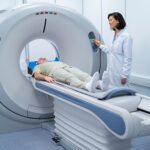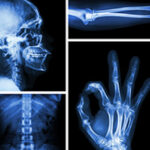

Top BSC Radiology Colleges in Himachal Pradesh – The demand for radiology graduates in India has always been high. If you have just passed out of school and want to move further in the field of radiology, we will talk about the top BSc radiology colleges in Himachal Pradesh. The healthcare sector in the country is always in need of a skillful radiology specialist who can diagnose the problem and then suggest the right means to make it curable. We will talk in brief about the top colleges that offer radiology courses and discuss in brief about the importance of radiology in the healthcare sector.
What is B.Sc. Radiology?
B.Sc. Radiology is an undergraduate healthcare programme dedicated to the study of medical imaging and the operation of imaging equipment used for diagnostic purposes. The programme covers areas such as different imaging techniques, care for patients, radiation protection, anatomy, and the operation of diagnostic equipment.
Top B.Sc. Radiology Colleges in Himachal Pradesh
Students should not make decisions based on a college’s rankings alone, but should compare colleges based on course curriculum, criteria, practical training, infrastructure and facilities, methodology, fees, and admission process. The following are some colleges that offer paramedical and allied healthcare programmes such as radiology and medical imaging in Himachal Pradesh:
Indira Gandhi Medical College
IGMC, Shimla, is one of the largest healthcare and educational institutes in Himachal Pradesh. The college offers various medical and healthcare programmes. The institution is associated with MBBS, postgraduate medical programmes, and clinical services. IGMC Shimla includes radiology as a medical speciality.
Address: Ridge Sanjauli Road, Lakkar Bazar, Shimla, Himachal Pradesh 171001
Maharishi Markandeshwar University, Solan
Maharishi Markandeshwar University in Solan provides courses related to healthcare and allied health sciences. It provides programmes like Radiology, LT, OT, Optometry, and Dialysis Technology. B.Sc. Medical Radiology and Imaging Technology programme is provided through its medical education setup.
Address: Bajoral Khurd, Solan, Himachal Pradesh 173229
Arni University
Arni University in Himachal Pradesh offers a range of undergraduate, postgraduate, and professional courses. It offers a 4-year programme for B.Sc. Medical Radiology and Imaging Technology. It requires 10+2 with science and at least 50% marks as eligibility criteria.
Address: Arni University, (Kathgarh), Tehsil – Indora, Distt. – Kangra, Himachal Pradesh 176401
Career Point University, Himachal Pradesh
Career Point University provides courses for a Bachelor’s in Radiology, and the duration of the course is 4 years. The course of the university includes areas like X-ray, CT scan, MRI, ultrasound, and diagnostic imaging.
Address: Bhoranj (Tikker – Kharwarian), Hamirpur, H.P. 176041
B.Sc. Radiology Eligibility Criteria
The eligibility criteria depend on the university or college. However, the students applying for the programme should have passed their Class 12 (or equivalent) examination with relevant science subjects and meet other eligibility conditions. Some general eligibility criteria for B. Sc. Radiology can include:
- Completion of Class 12 or equivalent from a recognised board.
- Specific science subjects and requirement of minimum marks or percentage.
- Additional requirements as specified in the course prospectus (if any).
Since the requirements can vary for every college or university, students should check the latest admission notification before applying.
B.Sc. Radiology Admission Process
The admission process may differ between institutions and their affiliated universities. Students can follow the steps below:
- Check the eligibility criteria for the course.
- Explore the course syllabus.
- Find the admission notification.
- Fill out the application form.
- Submit all the documents.
- Attend the interview or enter the counselling process, if needed.
- Pay the required fee.
- Begin the course.
Some institutions have merit-based admissions while others conduct their own procedures for the selection process. Students should always cross-verify the admission process of the college they are considering.
Documents Required for Admission
Students applying for B.Sc. Radiology programmes may have to submit some or all of the following documents:
- Class 10th and 12th certificates.
- Valid identity proof.
- Passport-size photographs.
- Transfer or migration certificate.
- Category certificate.
- Medical fitness certificate.
- Other documents as requested by the college or university.
Subjects Covered in B.Sc. Radiology
The curriculum for B.Sc. Radiology varies from one university to another, but some of the common subjects are:
- Human Anatomy
- Human Physiology
- Radiographic Techniques
- Radiation Physics
- Radiation Protection and Safety
- Medical Imaging Technology
- Patient Care
- Radiographic Positioning
- Pathology
- CT Imaging
- MRI Basics
- Contrast Media and Imaging Procedures
- Medical Professional and Ethical Practice
- Practical and Clinical Application
Career Opportunities after B.Sc. Radiology
Graduates with a B.Sc. in Radiology or other similar programmes related to medical imaging can explore careers in hospitals, diagnostic centres, imaging laboratories, and other healthcare settings.
Based on their skills and expertise, they may find employment as:
- Radiology Technologist
- X-Ray Technician
- Imaging Technologist
- CT Technologist
- MRI Technologist
- Radiology Assistant
- Diagnostic Imaging Technician
The job opportunities can depend on the educational qualifications, practical skills, training, any additional certifications and experience of the candidate.
Scope of B.Sc. Radiology
As technology has developed, the scope of medical imaging continues to evolve with the use of newer advanced machines and digital systems. The scan and imaging department of any healthcare facility is an integral part of the hospital that is of vital importance for diagnosis, assessment and follow-up.
Students with a good understanding of medical imaging, fundamentals of patient care and radiation protection can pursue higher education and specialised qualifications after their undergraduate programme.
Higher Education after B.Sc. Radiology
Students can choose higher education courses related to medical imaging, diagnostic services and allied healthcare, based on the eligibility criteria of the target course and institution.
Higher studies may help students broaden their knowledge base and expertise in the related fields and can help in career advancement, higher teaching roles, research and development, and other related opportunities.
Option Beyond Himachal Pradesh
Dolphin Life Sciences for Medical Imaging Courses Dolphin (PG) College of Science & Agriculture
offers education in several health sciences and paramedical fields as well.
Its approved courses include a BMRIT course as well as other healthcare courses.
Check out the latest course details for BMRIT, including eligibility criteria, course training, fees, and admission criteria.
Contact Details
Dolphin PG Lifesciences
Location: 18 Kms, Chandigarh – Sirhind, State Highway 12-A, P.O. – Chunni Kalan, Distt. Fathgarh Sahib, Punjab 140406
Email: admissions@dolphinpgcollege.com
Phone No.: +91-8427244771
Conclusion
Choosing the right B.Sc. Radiology College in Himachal Pradesh is a crucial decision for students seeking to work in the radiology and medical imaging field. Students should look beyond the course name when exploring a B.Sc. Radiology course in Himachal Pradesh and consider the eligibility criteria, course fees, practical training, clinical exposure, faculty, internship and placement on offer. Students who complete B.Sc. Radiology or Medical Radiology & Imaging Technology courses can gain knowledge in diagnostic imaging techniques and may work in diagnostic imaging, hospitals and other healthcare centres.
Students should contact the respective college institute for an updated list of fees, entry requirements and course details before you apply to any colleges.
Dolphin Life Sciences also has a Medical Radiology & Imaging Technology programme that can be explored by students who want to study in the field of medical imaging.
Frequently Asked Questions
What is B.Sc. Radiology?
B.Sc. Radiology is an undergraduate programme in medical imaging.
What are the eligibility criteria for B.Sc. Radiology?
Students need to have passed an Arts or Commerce (general) course with Class 12 or an equivalent qualification with the required subjects for the college or university.
What subjects do I study in B.Sc. Radiology?
Students can study anatomy, physiology, radiography, radiation physics, radiation safety, medical imaging, patient care, CT and MRI, and related practical subjects.
What can I do after B.Sc. Radiology?
Students can look for work in hospitals, diagnostic centres, and medical imaging centres. Depending on your qualifications and training, you can work in radiology and related fields.
Can I study further after B.Sc. Radiology?
Yes, students can continue their education by exploring postgraduate and more specialised courses related to medicine and medical imaging.
How do I select the right B.Sc. Radiology College in Himachal Pradesh?
Students should compare the eligibility criteria, course curriculum, practical training, clinical exposure, facilities, course fees, admission criteria, and other factors before choosing a course.