
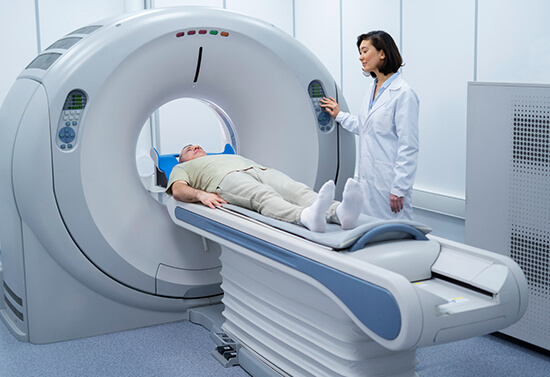
Top MSC Radiology Colleges In Himachal Pradesh – Radiology is a field of medicine that is very effective and highly in demand. Radiologists work in close contact with other medical professionals. It is a very promising and huge field that offers a wide scope for students. If you are planning to pursue a master’s in radiology and want to become a top radiologist, we can guide you to get into the best radiology college in Himachal Pradesh and also tell you about the radiology field. In the following article, we will talk about the top M.Sc. Radiology colleges in Himachal Pradesh that offer a Master’s in the radiology field.
What Is M.Sc. Radiology?
M.Sc. Radiology is a postgraduate medical imaging programme. The focus is on radiology, radiographic imaging techniques and advanced imaging technologies in healthcare.
For example, courses like CT, MRI, ultrasonography, conventional radiography, and other methods for imaging are included in M. Sc. Medical Radiology & Imaging Technology programme. The course is designed to enhance students’ technical and clinical expertise in medical imaging.
It can lead to professional, research, academic, tech-related, and educational careers in medical imaging.
What Is Driving the Rising Interest in M.Sc. Radiology Colleges in Himachal Pradesh?
The growth in MSc Radiology colleges in Himachal Pradesh is due to the wider expansion in the healthcare industry and diagnostic imaging services in the state.
The Himachal Pradesh Economic Survey 2025-26 has reported that the state currently has six medical colleges, one dental college, one Atal Medical and Research University, and one Atal Institute of Medical Super Specialities in the government sector and a private medical college and four private dental colleges. There is also an All-India Institute of Medical Sciences (AIIMS) at Bilaspur.
As per the 2024-25 data, the healthcare network is also growing. There are 115 hospitals, 106 Community Health Centres (CHCs), and 585 Primary Health Centres (PHCs), with 16,699 beds in allopathic healthcare facilities up to December 2024.
With the recent expansion of the healthcare and medical education ecosystems, modern healthcare operations require medical imaging and diagnostic services as an integral part of managing patient needs.
Modern healthcare settings rely on the use of imaging technologies to facilitate diagnosis and treatment of numerous medical conditions.
As medical infrastructure, healthcare services, and diagnostic testing continue to evolve, many students are exploring specialised programmes such as M. Sc. Radiology and Imaging Technology in Himachal Pradesh.
A Quick Overview of M. Sc. Radiology Colleges in Himachal Pradesh
Before making a choice among various MSc Radiology colleges in Himachal Pradesh, students are advised to review the particular programme name, eligibility, duration, admission process, clinical exposure, and affiliation or recognition of the university.
| Particulars | Details |
| Course Name | M.Sc. Medical Radiology & Imaging Technology |
| Course Level | Postgraduate |
| Average Duration | 2 years |
| Academic Focus | Advanced Medical Imaging and Radiology Technology |
| Major Areas | CT, MRI, X-ray, ultrasound, radiation physics, radiology sciences and technology |
| Prerequisites | Relevant bachelor’s degree, depending on the university |
| Selection Process | Merit, Admission test, or direct admission |
| Practical Exposure | Laboratory training, hospital centre visits or clinical rotations, depending on the programme |
| Occupational Fields | Medical centres, research, teaching, advanced medical imaging, hospital diagnostic imaging departments and more |
Students should always verify the current admission notification and prospectus of the particular college before applying, as parameters for M. Sc. Radiology eligibility, fees, intake, and rules may vary from year to year.
Top M.Sc. Radiology Colleges in Himachal Pradesh
To choose among the top MSc Radiology colleges in Himachal Pradesh, students should compare the actual M.Sc. Programme that is being offered, along with eligibility, curriculum, clinical training, infrastructure, and clinical exposure.
Maharishi Markandeshwar University, Solan
This institution offers an M.Sc. Medical Radiology & Imaging Technology course under the paramedical or allied healthcare programmes. The programme takes two years to complete.
To be eligible for admission, candidates must have completed B.Sc. Medical Radiography & Imaging Technology with a minimum of 50% marks in aggregate from a recognised university/institution. Admission to the course is based on merit in the qualifying examination.
The course aims to provide students with expert training in medical imaging and radiology technology. Students develop a knowledge base in imaging techniques, radiological practices and imaging physics, radiation safety and related areas.
Location: Bajoral Khurd, Solan, Himachal Pradesh 173229
Arni University, Kangra
Arni University is a private university in Kathgarh, Kangra, Himachal Pradesh. It offers an M.Sc. Radiology and Imaging Science Technology.
Course Duration: 2 years (Full Time)
Eligibility: You will need a bachelor in science degree with minimum 50% and in some courses you will have to study Physics, Chemistry, and Biology in 12th.
These are the common and basic eligibility conditions; make sure you go to the university to check for further criteria.
Cost of the Course: The course cost is about ₹ 1.2 lakhs per year, but the fee increases with time, so go to the university and ask the price of admission.
Tip: Before taking admission to any college or university, check whether there are seats available or not, and where the students go for hospital training.
Location: ARNI University, (Kathgarh), Tehsil Indora, Distt. Kangra, Himachal Pradesh – 176401
M.Sc. Radiology Colleges in Himachal Pradesh: Quick Comparison
| College | Course Length | Who can apply | Fees |
| Maharishi Markandeshwar University | 2 Year | B.Sc. Medical Radiography & Imaging Technology with 50% | Contact the college directly |
| Arni University | 2 Years | Science Bachelor’s degree with 50% | About ₹1.2 lakh in total |
| Dolphin (PG) College
Fatehgarh Sahib, Punjab |
2 Years (4 semesters) | Relevant bachelor’s degree with 50% (general) or 45% (reserved) | Fill the form to see it |
Career Opportunities After M. Sc. Radiology
The M.Sc. Radiology can offer different career opportunities in the healthcare field. Graduates can use their refined practical and technical knowledge of imaging skills in hospitals, diagnostic centres, healthcare providers, and other relevant institutions.
Some of the potential career options following an MSc in Radiology include:
- Radiology Technologist
- Radiographer
- X-ray Technologist
- CT Scan Technologist
- MRI Technologist
- Mammography Technologist
- Imaging Technologist
- Interventional Imaging Technologist
- Radiology Applications Specialist
- Roles related to Radiological Safety
- Quality Control Technologist
- PACS-related roles
- Roles in the Diagnostic Imaging Department
- Teaching and research roles
- Domains related to Medical Imaging Equipment and Technology
The specific designation and responsibilities may vary depending on the employer, professional designation, clinical exposure, qualifications, and compliance with legal norms.
Difference Between M.Sc., B.Sc. And MD Radiology
Many students use B.Sc. Radiology, M. Sc. Radiology, and MD Radiology interchangeably, but the facts show these as separate programmes.
| Programme Feature | B.Sc. Radiology & Imaging Technology | M.Sc. Radiology & Imaging Technology | MD Radiology / Radiodiagnosis |
| Level Of Study | Undergraduate | Postgraduate Study | Postgraduate Medical Study |
| Typical Entry Requirements | Generally 10+2 | Relevant Bachelor’s Degree | MBBS Degree and relevant admission requirements |
| Major Focus of Study | Fundamentals of Medical Imaging and radiography | Diagnostic radiography, imaging technology and specialised skills | Medical diagnosis through radiology and clinical medicine |
| Main areas of study | X-ray, basics of imaging, patient care and radiography techniques | Advanced imaging techniques, physics of imaging, research and technical specialities | Medical diagnosis and interpretation, hands-on clinical training |
| Career pathway | Imaging and radiography technology roles | Advanced imaging technology, research, teaching and specialities | Medical practitioners/radiologist |
While learning the difference between these programmes is useful for identifying an M. Sc. Radiology college in Himachal Pradesh, you should also be aware that colleges providing B. Sc. Radiology or MD Radiology are not to be identified as M. Sc. Radiology colleges.
Admission in M.Sc. Radiology?
Most colleges follow similar steps:
- Check your degree. Make sure your bachelor’s degree matches what the college asks for.
- Fill out the form. Apply online or visit the admissions office.
- Merit or test. Some colleges admit students on marks. Others may hold their own test. Ask the college which one applies.
- Get your documents in order. Make sure you have your mark sheets, ID, and category certificate if you have one, as well as some extra photos, all ready to go.
- Once you’ve paid the admission fee, your spot is secured.
Admission dates change every year, so it is important to check the respective college’s latest notice.
What Do You Study In M.Sc. Radiology?
Subjects are slightly different in each college. In general, you can expect to learn about:
- X-ray, CT scan, and MRI machines
- Ultrasound
- How radiations work and how to stay safe around it
- How to handle and improve medical images
- Research methods
- Hands-on training in hospitals
In the last part of the course, many colleges ask students to complete a small research project.
Want To Study M.Sc. Radiology Near Himachal Pradesh? Look at Dolphin
Some students from Himachal Pradesh also consider colleges in nearby Punjab for more options. For instance, Dolphin (PG) College in Fatehgarh Sahib, Punjab, has a program in M.Sc. Radio Medical Imaging Technology. This gives you an alternative to explore.
Quick Facts
Course length: 2 years, divided into 4 semesters
Eligibility: You need a bachelor’s degree in a relevant field. If you are in the general category, you’ll need at least 50% marks, while those in reserved categories can apply with 45% marks.
Entrance Exam: Dolphin Lifescience does not take an entrance exam; you can contact the admissions office for further details.
Why choose the Dolphin?
- Course variety: You will find courses in allied health fields at Dolphin, such as radiology, anaesthesia technology, cardiac care, and dialysis, which may appeal to you.
- You will find a placement cell at Dolphin which will help you to find jobs after completing your course with them and build a career.
Ready to apply?
Fill out the online admission form
Call: +91-84272 44774 or +91-84272 44771
Email: admissions@dolphinpgcollege.com
Address: 18 Kms, Chandigarh-Sirhind State Highway 12-A, Chunni Kalan, District Fatehgarh Sahib, Punjab 140406
Conclusion
Enrolling in an M.Sc. Radiology college in Himachal Pradesh is not only about comparing the college names. Prospective students should check the exact programme name, selection criteria, duration, content of study, practical training and clinical exposure, and infrastructure.
Medical imaging technology is an increasingly popular avenue within the healthcare system, with emerging opportunities to develop both technical and professional specialised skills.
Frequently Asked Questions About M.Sc. Radiology Colleges in Himachal Pradesh
What is M.Sc. Radiology?
M.Sc. Radiology is a postgraduate course that deals with medical imaging, radiography procedures, and advanced imaging technology. The program can also be offered as an M. Sc. Medical Radiology & Imaging Technology.
What is the duration of the M. Sc. Radiology course?
M.Sc. Medical Radiology & Imaging Technology is offered as a 2-year postgraduate course. The course duration may depend on the university.
What is the eligibility for M.Sc. Radiology?
The eligibility for the M.Sc. Medical Radiology & Imaging Technology course may be university-dependent. For example, MMU Solan’s M. Sc. programme requires a B. Sc. Medical Radiography & Imaging Technology qualifying graduation with a minimum of 50% aggregate marks.
Is M.Sc. Radiology equivalent to MD Radiology?
No. The M. Sc. Radiology programme is predominantly based on medical imaging technology, whereas the MD Radiology / Radiodiagnosis postgraduate degree is based on clinical medicine.
What are the subjects in M.Sc. Radiology?
Depending on the university, courses in M. Sc. Radiology may cover topics including X-ray, CT and MRI imaging, ultrasonography, physics of radiology, radiation safety and image processing, research methods and medical imaging.
What are the career prospects after M.Sc. Radiology?
There are various opportunities after the completion of an M.Sc. Radiology courses include roles such as radiology technologist, X-ray technologist, CT technologist, MRI technologist, advanced imaging technology professionals, research professionals, and academic/research teaching roles.
Is a B.Sc. Radiology necessary for an M.Sc. Radiology?
It depends on the university. For example, MMU Solan requires candidates to hold a B. Sc. Medical Radiography & Imaging Technology (minimum 50% marks) qualification for its M. Sc. Medical Radiology & Imaging Technology programme.
How much is the fee for M.Sc. Radiology in Himachal Pradesh?
The cost of the course varies from one college to another. For example, Arni University charges around ₹1.2 lakh for the entire course.
Is there an entrance exam for M.Sc Radiology?
It depends on the college. Some admit on marks, and some take their own test. Always check the college’s notice.
Can I do M.Sc Radiology after any B.Sc?
Not always. Many colleges prefer a B.Sc in Radiology or Radiography. Some accept other science degrees. Check each college’s rules.
Does Career Point University, Hamirpur offer M.Sc Radiology?
It only offers a B.Sc in Medical Radiology and Imaging Technology.
Is M.Sc Radiology the same as MD Radiology?
M.Sc Radiology is focused on the technology and equipment used in imaging. On the other hand, MD Radiology is a program designed for medical doctors who have already completed their MBBS degree.